

common jewelweed
Impatiens capensis
What it is
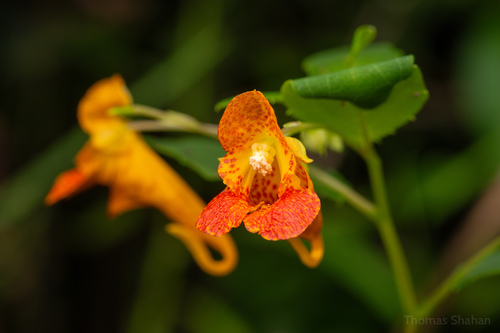
Impatiens capensis, the orange jewelweed, common jewelweed, spotted jewelweed, spotted touch-me-not, or orange balsam, is an annual plant native to North America. It is common in bottomland soils, ditches, and along creeks, often growing side-by-side with its less common relative, Yellow Jewelweed (I. pallida).
Where and when to find it
- Habitat
- You can find jewelweed in wet places like along streams, ponds, ditches, and in moist woodlands across much of the eastern and central US.
- How to find it
- Look for it in damp, shady spots. The flowers are bright orange with red spots. The 'exploding' seed pods are its most fun trick!
- Best time of day
- Summer and early fall when it's flowering and the seed pods are ripe.
How it lives
- What it eats
- Sunlight, water, and nutrients from wet soil
- What eats it
- Hummingbirds (nectar), birds and small mammals (seeds)
Worth knowing
- The sap from its stem is sometimes used to soothe skin itches from poison ivy.
- Another name for it is 'touch-me-not' because of its seed pods.
- The flowers hang like little jewels, especially when dew drops are on them.
- Its flowers are shaped perfectly for hummingbirds to reach the nectar.
- The seed pods coil up when they release their seeds.
- After rain, water beads up on its leaves like tiny shimmering jewels.
Why it matters
Common jewelweed provides nectar for hummingbirds and bees. Its seeds are a food source for birds and small mammals.