

Creosote Bush
Larrea tridentata
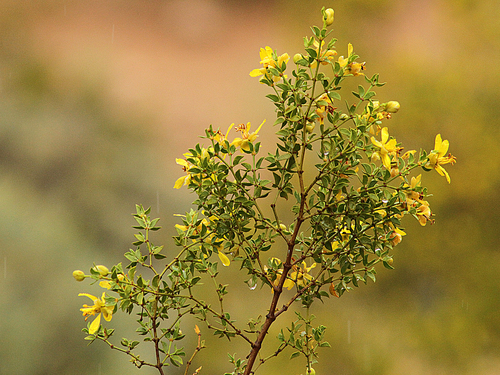
What it is
Larrea tridentata is known as creosote bush and greasewood as a plant, chaparral as a medicinal herb, and as gobernadora in Mexico, Spanish for "governess", due to its ability to secure more water by inhibiting the growth of nearby plants. In Sonora, it is more commonly called hediondilla....
Where and when to find it
- Habitat
- Found in arid and semi-arid regions of the southwestern US, especially in the Sonoran, Mojave, and Chihuahuan Deserts.
- How to find it
- Look for a medium-sized shrub with small, dark green leaves and small yellow flowers. It has a distinctive smell after rain.
- Best time of day
- Year-round; flowers are best seen in spring.
How it lives
- What it eats
- It makes its own food from sunlight (photosynthesis)
- What eats it
- Desert insects, small mammals (leaves and seeds sparingly)
Worth knowing
- The leaves are covered in a resin that gives the plant its distinctive smell, especially after rain.
- It can live for thousands of years, with some 'clones' of a single plant creating large, ancient rings.
- It has small, fuzzy white fruits that look like tiny cotton balls.
- Native Americans used Creosote Bush for many purposes, including medicine and basketry.
- It can survive extreme heat and drought conditions in the desert.
- The plant releases a chemical into the ground that helps prevent other plants from growing too close to it.
Why it matters
Creosote Bush provides shelter and food for many desert animals. It's a key plant in its ecosystem.