

mayapple
Podophyllum peltatum
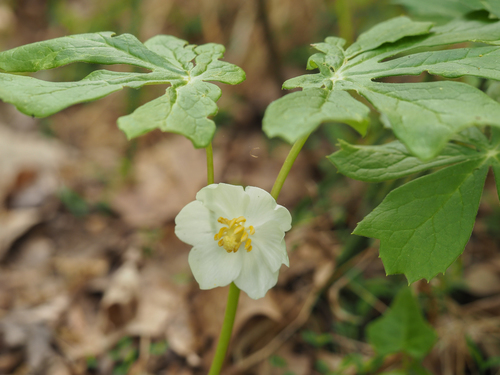
What it is
Podophyllum is an herbaceous perennial plant in the family Berberidaceae, described as a genus by Linnaeus in 1753. In the past, several species were included in the genus, but all but one have been transferred to other genera (Dysosma, Pilea, and Sinopodophyllum). The one remaining species is Podophyllum peltatum, with common names mayapple, American mandrake, wild mandrake, and ground lemon. It is widespread across most of the eastern United States and southeastern Canada.
Where and when to find it
- Habitat
- Found in woodlands and forests primarily in the eastern and central US.
- How to find it
- Look for large, umbrella-like leaves in moist, shady woods. The flower is often hiding underneath the leaves.
- Best time of day
- Flowers bloom in early to mid-spring; fruit appears in summer.
How it lives
- What it eats
- It makes its own food from sunlight (photosynthesis)
- What eats it
- Box turtles, other small mammals (the fruit)
Worth knowing
- The plant has two large, deeply lobed leaves that look like an umbrella.
- Its white or pinkish flower hangs underneath the leaves.
- The fruit, called a 'mayapple', is yellow when ripe and can be eaten by some animals.
- Early settlers used parts of the plant for different purposes, but some parts are not safe to eat.
- Only the ripe fruit is safe to eat for humans, but it's best to leave wild fruit for wildlife.
- The plant spreads by underground stems, creating patches of mayapples.
Why it matters
Mayapple provides early spring food for some wildlife and helps new plants grow by spreading its seeds.