

red deadnettle
Lamium purpureum
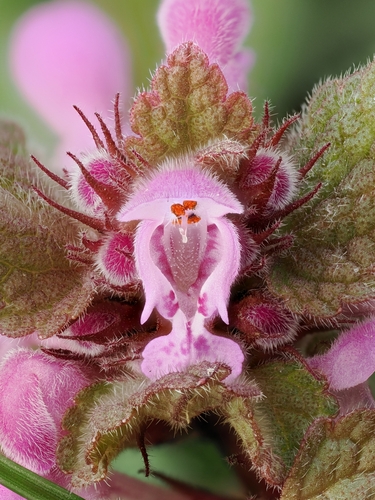
What it is
Lamium purpureum, known as red dead-nettle, purple dead-nettle, red henbit, purple archangel, or velikdenche, is a herbaceous flowering plant native to Europe and Asia.
Where and when to find it
- Habitat
- You can find red deadnettle in many places across the United States. It likes disturbed ground, gardens, yards, and roadsides.
- How to find it
- Look in open areas in early spring, especially where the ground has been dug up. It often grows in big patches.
- Best time of day
- Early spring, often March to May, during the day.
How it lives
- What it eats
- It makes its own food from sunlight, water, and air.
- What eats it
- Some insects, and it can be eaten by people too! (It's edible for humans)
Worth knowing
- Despite its name, it's not related to stinging nettles and won't sting you.
- It's part of the mint family, even though it doesn't always smell like mint.
- It has tiny hairs on its leaves and stems.
- Its leaves can be eaten in salads or cooked like spinach.
- You might see bees buzzing around it even on cool spring days.
- The square stems are a clue that it's in the mint family.
Why it matters
Red deadnettle provides early nectar for hungry insects like bees when other flowers haven't bloomed yet. It helps kickstart the spring ecosystem.