

Solomon's plume
Maianthemum racemosum
What it is
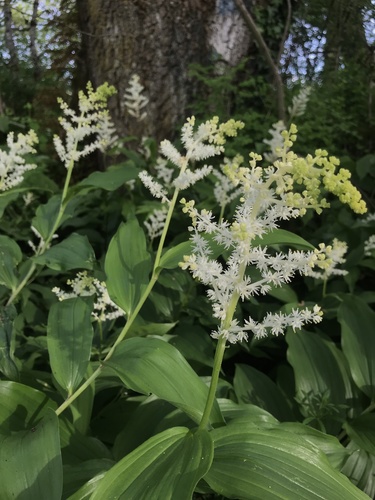
Maianthemum racemosum (treacleberry, feathery false lily of the valley, false Solomon's seal, Solomon's plume or false spikenard; syn. Smilacina racemosa, Vagnera racemosa) is a species of flowering plant native to North America. It is a common, widespread plant known from every US state except Hawaii, and from every Canadian province and territory except Nunavut, as well as from Mexico.
Where and when to find it
- Habitat
- You can find Solomon's plume growing in forests and woodlands across most of the continental United States.
- How to find it
- Look for elegant arching stems with many small, star-shaped white flowers at the very end. Later in summer, look for red berries.
- Best time of day
- Spring for flowers, late summer to fall for berries. Look during the day.
How it lives
- What it eats
- Makes its own food using sunlight (photosynthesis).
- What eats it
- Insects, birds, small mammals.
Worth knowing
- The berries are edible for humans too, but they are very tart!
- The plant gets its name from marks on its rootstock that look like ancient seals.
- It is also called False Solomon's Seal because it looks similar to another plant.
- Its flowers smell like lily-of-the-valley, a sweet scent!
- Some people plant it in their gardens because it's so pretty and easy to grow.
- The plant can live for many years in the same spot.
Why it matters
This plant provides food for many insects with its flowers and berries. It helps keep the forest ecosystem healthy.