

white snakeroot
Ageratina altissima
What it is
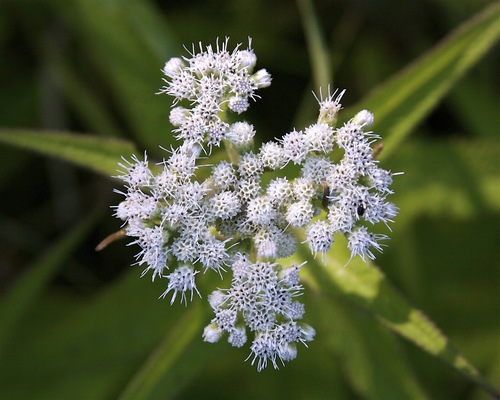
Ageratina altissima, also known as white snakeroot, richweed, white sanicle, or tall boneset, is a poisonous perennial herb in the family Asteraceae, native to eastern and central North America. An older binomial name for this species is Eupatorium rugosum, but the genus Eupatorium has undergone taxonomic revision by botanists, and a number of the species that were once included in it have been moved to other genera.
Where and when to find it
- Habitat
- White Snakeroot is common throughout the eastern and central United States. It grows in woodlands, shaded areas, and forest edges.
- How to find it
- Look for it in shady woods and along forest paths. Its white flowers are very noticeable in late summer and fall.
- Best time of day
- Late summer and fall, during the day.
How it lives
- What it eats
- It makes its own food from sunlight, water, and air.
- What eats it
- Some insects, but it's toxic to most large animals.
Worth knowing
- It was once linked to a mysterious illness called 'milk sickness' because toxins can pass into milk.
- The flowers attract many different types of insects.
- It is in the daisy family.
- Native Americans used this plant for various medicinal purposes, knowing how to prepare it carefully.
- Its roots were traditionally used to treat snakebites.
- Look closely and you'll see tiny hairs on its stems!
Why it matters
It provides late-season nectar for pollinators when many other plants have finished blooming. Its presence indicates certain soil conditions.